
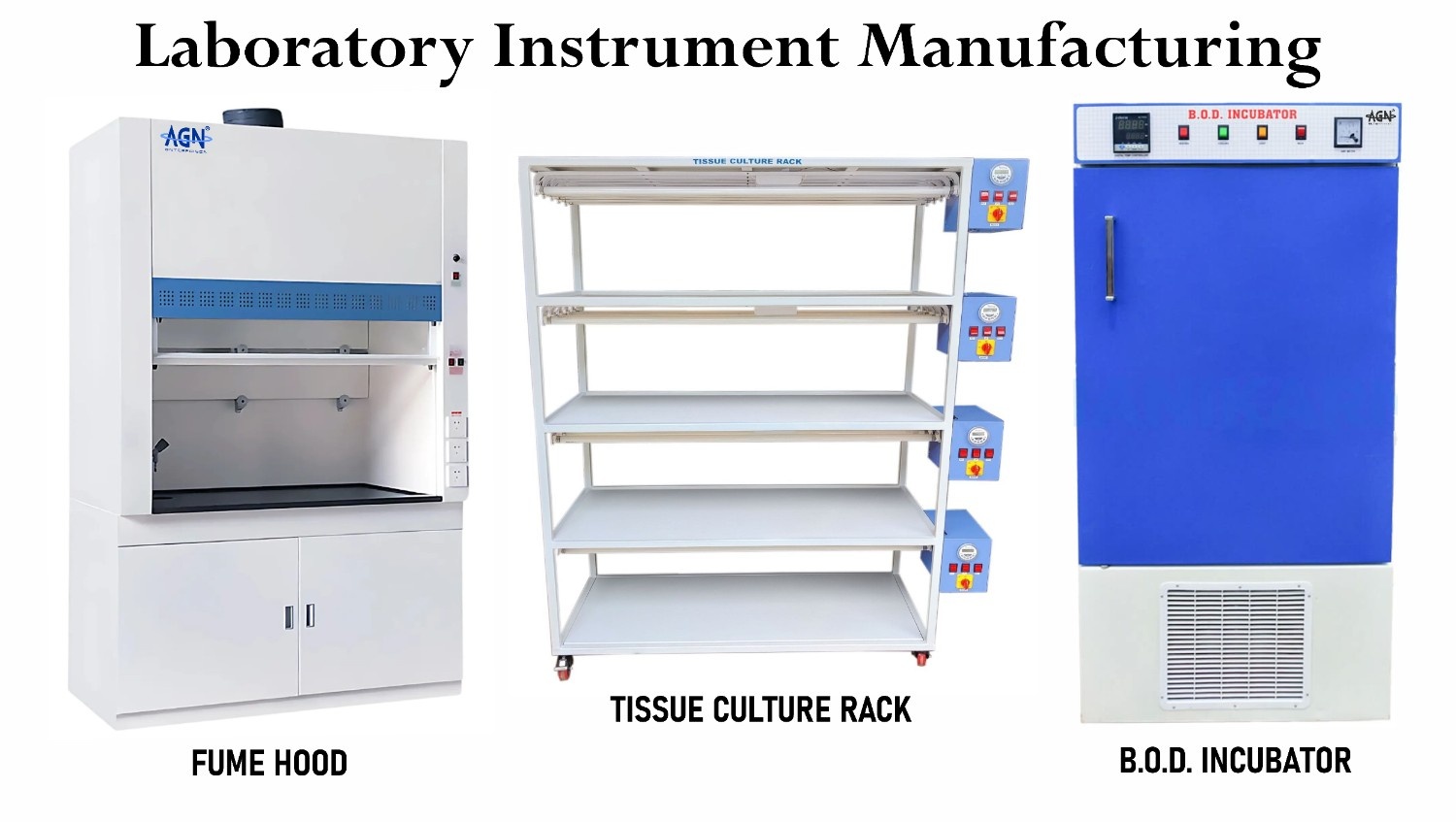
In today’s rapidly advancing scientific environment, precision and accuracy are essential. Across industries such as pharmaceuticals, biotechnology, and environmental research, dependable laboratory instruments are crucial for generating credible and error-free results. AGN ENTERPRISES, a trusted provider of Scientific Laboratory Instruments in India, emphasizes strong quality control processes to ensure every product supports reliable scientific outcomes.
Quality control involves a systematic set of procedures designed to monitor and verify the consistency, precision, and functionality of laboratory instruments. These measures help prevent errors, deviations, and equipment failures that can compromise research quality.
From selecting high-grade materials to performing final inspections, rigorous quality checks are integrated into every stage of the manufacturing process to ensure dependable performance and long-term durability.
Precision engineering is the foundation of reliable laboratory tools. Modern technology, advanced machinery, and detailed calibration processes are used to create instruments that meet strict accuracy standards.
Each component is thoroughly tested to guarantee stability, repeatability, and optimal performance during scientific analysis.
Compliance with established national and international standards is essential in laboratory manufacturing. Strict adherence to regulatory guidelines ensures each instrument meets globally accepted requirements for safety, performance, and quality.
This level of compliance is especially important for research conducted in regulated fields like pharmaceuticals, healthcare, and biotechnology.
Quality control is not a one-time effort—it is an ongoing process. Through continuous improvement and research-driven innovation, manufacturing methods are refined and upgraded regularly. This ensures laboratory instruments stay aligned with evolving scientific demands and technological advancements.
Every scientific discipline and laboratory environment has unique needs. A customer-centric approach ensures products can be customized, supported, and configured based on specific operational requirements.
This includes tailored applications, specialized components, and responsive service to enhance efficiency, accuracy, and ease of use.
Before selecting laboratory equipment, consider the following:
Understand the type of testing, measurement precision, and sample characteristics required for your experiments.
Ensure the equipment fits within your existing laboratory setup, including available space, utilities, and software systems.
Compare accuracy, resolution, sensitivity, and operational efficiency across different models.
Look beyond initial cost—factor in calibration, maintenance, service, and consumable expenses.
Choose instruments that offer intuitive operation and require minimal training.
Ensure the instrument meets relevant regulatory and quality assurance standards.
High-quality laboratory instruments are essential for ensuring precision, reliability, and consistent scientific results. Through rigorous quality control, precision engineering, strict compliance, and ongoing improvements, manufacturers uphold the standards required in modern scientific research. Choosing instruments built with strong quality foundations enables laboratories to work more efficiently and achieve accurate outcomes in every experiment.
AGN ENTERPRISES has regular exports of Laboratory Glassware Manufacturer in India , Educational Scientific Instruments, School Laboratory Scientific Equipment , Biology Lab Equipment ,Physics Lab Equipment , Chemistry Lab Instruments , Laboratory Equipment , Lab Glassware, Biology Lab Equipment , School lab , Math Lab , Electronics Lab Trainer, Microscopes , Engineering Lab Equipment and Petroleum Testing Equipment, Survey Instruments, Hospital Equipment, Medical Monitoring System and Physiotherapy Equipment for Schools, Colleges, University & Research Labs.