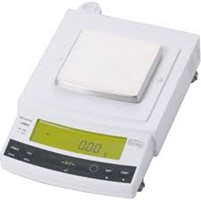
The Weighing Balance from AGN Enterprises is a precision laboratory instrument designed for the accurate measurement of sample mass in scientific, educational, research, and quality-control applications. Its electronic operation and digital display provide convenient readings for routine laboratory weighing.
The balance is suitable for schools, colleges, universities, chemistry laboratories, pharmaceutical laboratories, research facilities, industrial laboratories, medical institutions, and quality-control departments.
The Weighing Balance provides a convenient method for determining the mass of laboratory samples, chemicals, powders, and other suitable materials.
Depending on the supplied configuration, features may include:
Digital Display
Electronic Weighing System
Tare Function
Zero Adjustment
Flat Weighing Pan
Control Keys
Stable Housing
Measurement Unit Selection
Exact capacity, readability, accuracy, pan dimensions, calibration method, and available weighing units may vary according to the supplied model.
The electronic measuring system converts the applied load into a digital reading that can be viewed directly on the display.
This eliminates the need to interpret mechanical scales and makes routine laboratory measurements easier to perform.
The balance should be placed on a stable and level surface to obtain reliable readings.
The Weighing Balance features a digital display for convenient observation of measurement results.
A clear numerical display allows students and laboratory personnel to record sample mass efficiently during experiments, formulation work, and routine laboratory procedures.
Display design and resolution depend on the supplied instrument.
Where provided, the tare function allows the mass of a container to be excluded from the final sample measurement.
A typical procedure is:
Place Container → Tare Balance → Add Sample → Read Sample Mass
The zero function helps establish the correct starting point before weighing.
The weighing pan provides a stable surface for suitable samples or sample containers.
Samples should be positioned appropriately on the pan and kept within the rated capacity of the instrument. Chemicals should generally be weighed in suitable containers rather than placed directly on the balance where laboratory procedures require containment.
Accurate mass measurement is important in many scientific procedures, particularly where quantities must be measured consistently.
Reliable results depend not only on the instrument but also on correct operating conditions. The balance should be protected from vibration, excessive air movement, unstable surfaces, overloading, and contamination.
Depending on the model, calibration may be performed using an appropriate calibration mass or another specified calibration procedure.
Regular checking helps ensure that the balance continues to provide measurements appropriate for its intended laboratory use.
The required calibration mass, procedure, and accuracy should be confirmed from the technical specifications of the supplied model.
The Weighing Balance can be used for a variety of weighing applications, including:
The balance helps students develop practical skills in mass measurement, tare operation, calibration concepts, sample handling, measurement accuracy, and laboratory record keeping.
It is particularly useful for practical chemistry, physics, biology, pharmaceutical science, and general laboratory training.
AGN Enterprises supplies laboratory balances, scientific instruments, measurement equipment, laboratory apparatus, and educational products for schools, colleges, universities, research laboratories, and professional institutions.
Our laboratory equipment supports scientific measurement, practical experimentation, quality-control procedures, and educational training.