

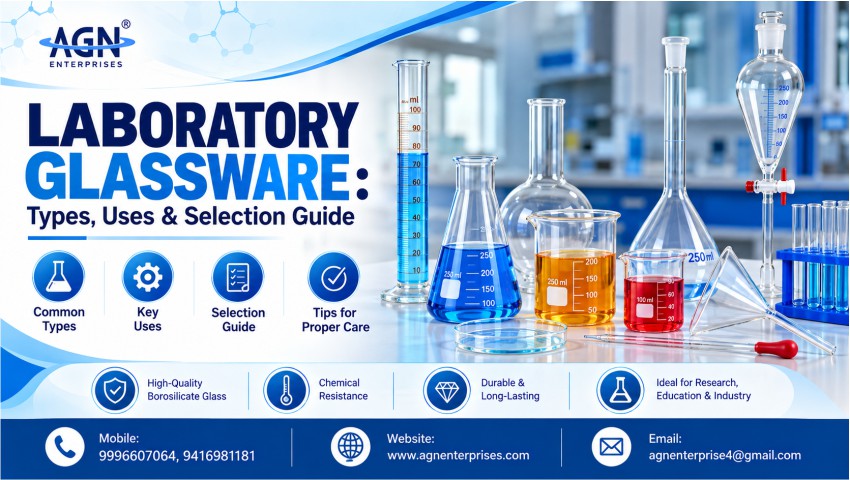
Laboratory glassware supports many everyday laboratory activities, including measuring, mixing, heating, transferring, filtering, separating and preparing samples. Common items include beakers, test tubes, conical flasks, volumetric flasks, pipettes and burettes. Each item serves a specific purpose and suits particular laboratory procedures.
The right laboratory glassware helps users work accurately, safely and consistently. Therefore, buyers should consider several factors before selecting a product. These factors include glass material, capacity, accuracy, chemical compatibility, temperature requirements and intended use.
Chemistry, pharmaceutical, biology, educational, research and industrial laboratories all use different types of glassware. In this guide, we explain the main laboratory glassware items, their uses, materials, selection factors, safety practices and applications.
AGN Enterprises manufactures and supplies laboratory equipment and products for educational, pharmaceutical, research, industrial and other laboratory applications.
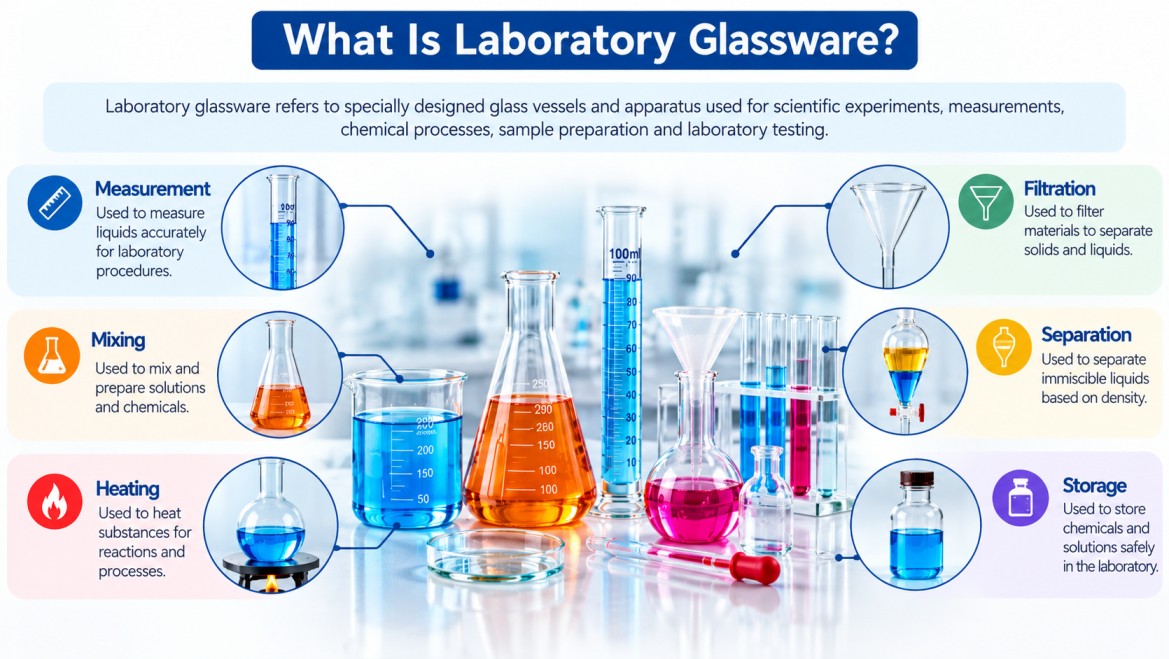
Laboratory glassware includes specially designed glass vessels and apparatus for scientific experiments, measurements, chemical processes, sample preparation and laboratory testing. Unlike ordinary glass containers, these products feature specific shapes, dimensions, graduations and material properties for laboratory work.
Laboratories use glassware for many purposes. For example, users can measure liquids, prepare solutions, mix chemicals, conduct reactions, heat substances, transfer samples, filter materials and store solutions.
The right product depends on the procedure, required accuracy, chemical compatibility, temperature and volume. In addition, manufacturers use different glass materials to meet different laboratory requirements.
Borosilicate glass, for example, offers useful chemical resistance and thermal properties for many laboratory applications. However, users should always check the product specifications before selecting glassware for a particular process.


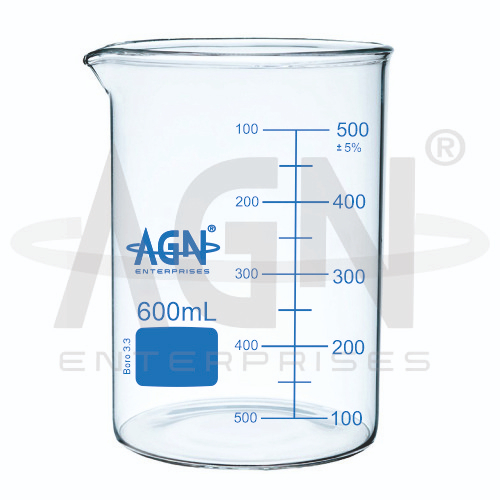
Beakers serve as general-purpose laboratory containers for holding, mixing, dissolving and heating liquids. They come in different capacities and designs. Many beakers also include graduations that provide approximate volume readings.
Chemistry, pharmaceutical, educational and research laboratories use beakers extensively. When choosing a beaker, consider the required capacity, glass material, shape and application.
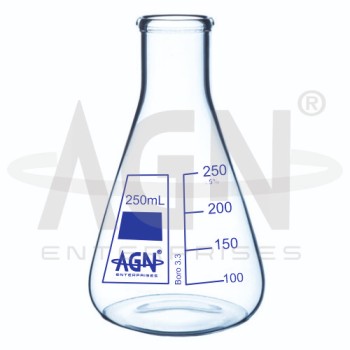
Conical flasks, also called Erlenmeyer flasks, feature a broad base and narrow neck. This shape makes them useful for mixing liquids because users can swirl the contents with less risk of splashing.
Laboratories commonly use conical flasks for solution preparation, mixing, titration-related procedures, sample handling and laboratory reactions. Different capacities and designs allow users to select a suitable flask for their work.
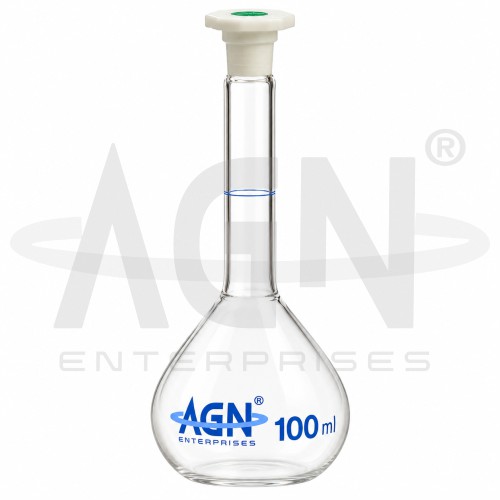
Volumetric flasks help users prepare solutions to a specified volume with high accuracy. These flasks have a flat base, narrow neck and calibration mark that indicates the specified volume.
Laboratories commonly use them to prepare standard solutions and dilutions. Therefore, users should choose volumetric flasks when the procedure requires controlled volume preparation rather than general liquid handling.
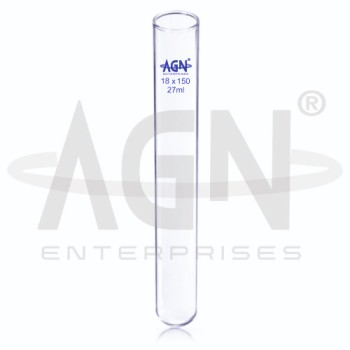
Test tubes hold, mix, heat or observe relatively small quantities of substances. Chemistry, biology, educational and research laboratories use them for many small-scale procedures.
Manufacturers offer test tubes in different sizes and designs. Therefore, users should select a suitable type according to the material, volume and procedure.
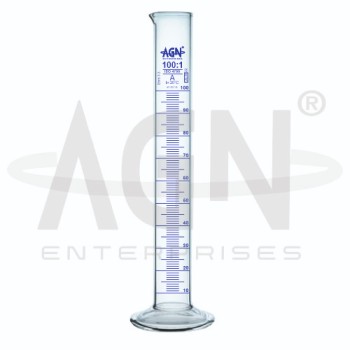
Measuring cylinders provide a convenient way to measure liquid volumes. Their graduated design helps users read the approximate volume of a liquid.
Laboratories use measuring cylinders for routine volume measurements and liquid preparation. However, procedures that require higher volumetric accuracy may need calibrated glassware such as volumetric flasks or suitable pipettes.
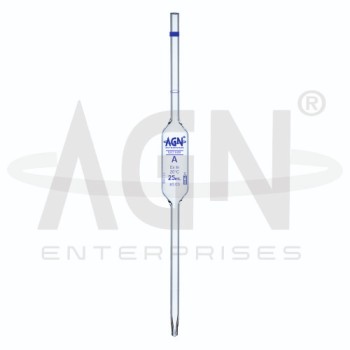
Pipettes help users transfer measured quantities of liquid from one container to another. Common types include volumetric pipettes and graduated pipettes.
Pharmaceutical, analytical, chemical and biological laboratories use pipettes when they need controlled liquid transfer. The required volume and accuracy should guide the selection of a suitable pipette.
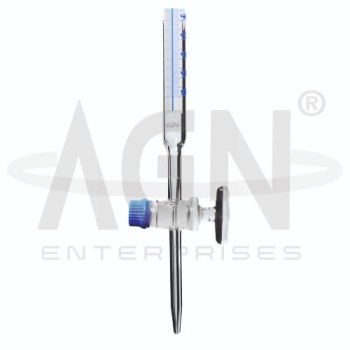
Burettes consist of graduated tubes with a stopcock or control valve. This design allows users to deliver liquids in a controlled manner.
Laboratories commonly use burettes during titration procedures. Users can determine the volume delivered by reading the graduations before and after dispensing the liquid.
Proper handling also matters. Users should position the burette correctly and read the liquid level according to accepted laboratory practice.
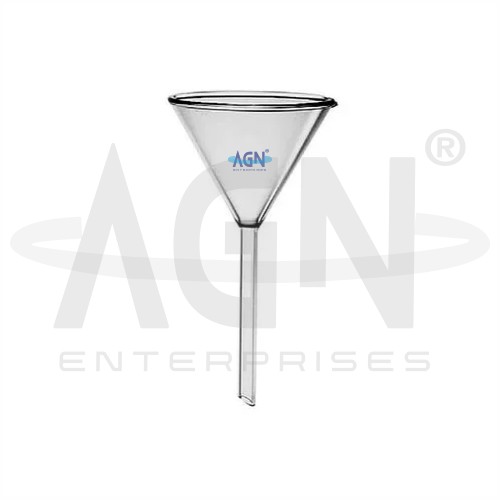
Laboratory funnels help users transfer liquids between containers. They can also support filtration when users place suitable filter media inside them.
Different funnel designs suit different applications. Therefore, consider the material, capacity and intended transfer or filtration process before selecting a funnel.
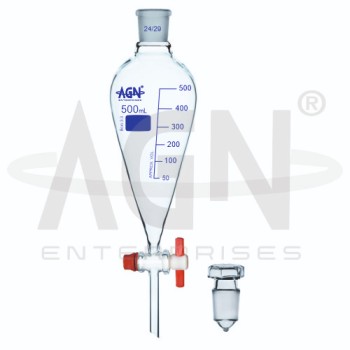
Separatory funnels help users separate immiscible liquids according to differences in density. These funnels usually feature a stopper at the top and a stopcock at the bottom.
Chemistry and research laboratories commonly use separatory funnels for liquid-liquid extraction and other separation procedures.
Users should handle these funnels carefully, especially when working with volatile liquids or systems that can build pressure.
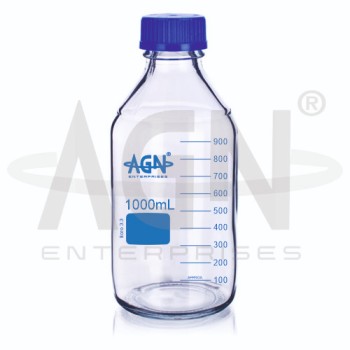
Reagent bottles store laboratory chemicals, solutions and other materials. Manufacturers produce them in different capacities and with different closures.
Clear glass works well for many storage applications, while amber glass can help protect light-sensitive materials. Therefore, users should consider the stored substance, light sensitivity, closure and chemical compatibility before selecting a reagent bottle.

Watch glasses are shallow, circular pieces of glass that support several laboratory tasks. Users can place small samples on them, cover beakers or evaporate small quantities of liquid.
Chemistry, educational and research laboratories commonly use watch glasses because of their simple and versatile design.
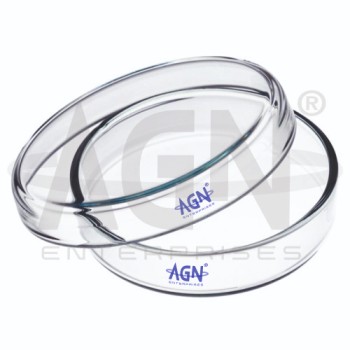
Glass Petri dishes provide shallow containers for sample handling, observation and certain biological laboratory applications.
Users can clean and sterilize suitable glass Petri dishes for repeated use when the laboratory procedure permits it. However, the cleaning and sterilization method should match the application and product specifications.
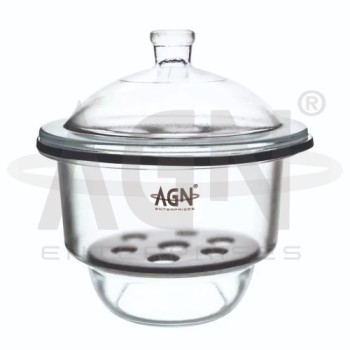
Desiccators provide an enclosed environment that helps protect materials from moisture. Laboratories use them for drying and storing moisture-sensitive samples and materials.
Some designs also support vacuum applications. Therefore, users should select the appropriate desiccator according to the required procedure and operating conditions.
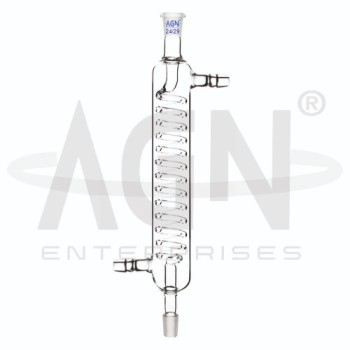
Laboratory condensers cool vapours and convert them back into liquid. Laboratories commonly use them during distillation and reflux procedures.
Common designs include Liebig and Friedrichs condensers, along with other specialized types. The application, connection requirements and laboratory setup should guide the selection.
Laboratory glassware comes in many forms, and each type serves a particular purpose. Understanding these categories can help users choose suitable products for their laboratory procedures.
| Type of Laboratory Glassware | Examples | Main Application |
|---|---|---|
| Measuring glassware | Measuring cylinders, pipettes, burettes | Measuring and transferring liquids |
| Volumetric glassware | Volumetric flasks | Preparing solutions to specified volumes |
| Mixing glassware | Beakers, conical flasks | Mixing and solution preparation |
| Reaction glassware | Test tubes, flasks | Laboratory reactions and experiments |
| Filtration glassware | Funnels, Buchner funnels | Filtration |
| Separation glassware | Separatory funnels | Liquid-liquid separation |
| Storage glassware | Reagent bottles | Chemical and solution storage |
| Specialized glassware | Condensers, desiccators | Specific laboratory procedures |
As a result, users should first identify the laboratory task and then select the appropriate glassware category.
Manufacturers use different glass materials to meet different laboratory requirements. However, the right choice depends on factors such as chemical exposure, temperature and application.
Borosilicate glass works well for many laboratory applications because it offers good chemical resistance and resistance to thermal shock. As a result, laboratories commonly use it for beakers, flasks, test tubes, condensers and other apparatus.
Soda-lime glass suits certain laboratory products and applications. However, users should consider the required chemical and thermal properties before selecting this material.
Quartz glass supports specialized applications that require properties such as high temperature resistance and specific optical characteristics. Therefore, laboratories typically select it when the application demands properties beyond those offered by common laboratory glass materials.
In every case, users should select the glass material according to the intended application and operating conditions.
Borosilicate glass has become common in laboratory applications because it combines useful chemical and thermal properties with good transparency.
For example, many laboratory procedures involve chemical exposure or temperature changes. Borosilicate glass can suit many of these applications because of its resistance to thermal shock and chemical attack.
However, users should not assume that one material suits every laboratory procedure. Instead, they should check chemical compatibility, operating temperature and manufacturer specifications before selecting glassware.
Choosing laboratory glassware requires more than selecting a suitable shape or capacity. Instead, buyers should evaluate the complete application before making a selection.
First, identify the intended task. Measurement, mixing, heating, filtration, storage and separation may require different designs.
Some laboratory procedures require precise volume measurement. In such cases, users may need calibrated volumetric glassware instead of general-purpose containers.
Check whether the glass material suits the chemicals or substances that will contact the glassware. Always consider the specific chemical and operating conditions.
Choose a capacity that matches the quantity of material involved in the procedure. As a result, users can make handling and measurement more convenient.
If the procedure involves heating or temperature changes, select glassware designed for those conditions. In addition, follow the manufacturer’s instructions for heating and handling.
Look at features such as graduations, neck dimensions, joints, stoppers, stopcocks and other connections. These details can affect how well the glassware fits into the laboratory setup.
Laboratories that require frequent cleaning or sterilization should select glassware that suits their established procedures. Therefore, cleaning and sterilization requirements should form part of the purchasing decision.
Finally, review the manufacturer’s specifications, accuracy classification and applicable laboratory standards when the application requires specific dimensions or measurement accuracy.
Class A and Class B designations apply to certain volumetric glassware and indicate specified accuracy tolerances.
Class A glassware generally provides tighter specified tolerances. Therefore, laboratories often select it for applications that require greater volumetric accuracy.
Class B glassware generally permits wider tolerances and can suit routine laboratory applications where the procedure does not require the same level of volumetric accuracy.
However, the exact tolerance depends on the glassware type and applicable standard. Therefore, users should check the manufacturer’s specifications and relevant standards before selecting calibrated glassware.
Different laboratories require different combinations of glassware. Therefore, users should always match the equipment to the actual procedure and application.
Chemistry laboratories commonly use beakers, flasks, burettes, pipettes, funnels, condensers, test tubes and specialized glassware. These products support activities such as reactions, measurement, preparation and analysis.
Pharmaceutical laboratories use glassware for solution preparation, sample handling, testing, research and quality-control procedures. In addition, the laboratory should select products according to the specific process and applicable requirements.
Biology laboratories may use test tubes, Petri dishes, flasks, bottles and other glassware for sample handling, preparation, observation and laboratory procedures. For this reason, users should consider the application and cleaning requirements before selecting products.
Schools, colleges and universities commonly use beakers, test tubes, measuring cylinders, conical flasks and funnels for practical experiments, demonstrations and laboratory training. Similarly, educational laboratories should select glassware according to the experiment and student requirements.
Research laboratories may require both standard and specialized glassware. However, the required products depend on the experimental procedure, measurement requirements and research application.
Industrial laboratories use glassware for testing, quality control, sample preparation, chemical analysis and other process-related laboratory work. Consequently, laboratories should select products that match their specific testing procedures and operating conditions.
AGN Enterprises manufactures and supplies laboratory equipment and products for educational, pharmaceutical, research, industrial and other laboratory applications.
Proper cleaning helps laboratories maintain glassware and reduce contamination during laboratory procedures.
Follow the laboratory’s established cleaning procedure and consider the type of material and contamination involved.
General practices include:
The laboratory should select its cleaning method according to the glassware, contamination and intended application.
Laboratory glassware requires careful handling because damaged or improperly used glass can create safety risks.
Following these practices can help laboratories reduce avoidable damage and improve safe handling.
Both glass and plastic laboratory products can serve useful purposes. However, the appropriate choice depends on the laboratory application and material requirements.
| Factor | Glass | Plastic |
|---|---|---|
| Chemical compatibility | Depends on glass type and chemical | Depends on polymer and chemical |
| Temperature resistance | Generally high for suitable glass | Material dependent |
| Break resistance | Lower | Generally higher |
| Transparency | Excellent | Material dependent |
| Reusability | Often reusable | Application dependent |
| Sterilization | Application dependent | Material dependent |
Therefore, laboratories should consider chemical compatibility, temperature, accuracy, durability, handling and the specific procedure before choosing between glass and plastic.
Price alone should not determine the selection of laboratory glassware. A low-cost product may not meet the technical requirements of a particular application.
Common purchasing mistakes include:
A clear understanding of the laboratory requirement can help buyers select more suitable glassware.
When sourcing laboratory glassware, buyers should consider more than product availability and price. Instead, they should evaluate the supplier’s product range, specifications and support.
Important factors include:
AGN Enterprises manufactures and supplies laboratory equipment and related products for educational, pharmaceutical, research, industrial and other laboratory applications.
Buyers can evaluate AGN products according to their required specifications, intended application and laboratory operating conditions.
Laboratory glassware helps users measure, mix, heat, transfer, filter, separate, store and prepare materials during laboratory procedures.
Borosilicate glass is widely used for many laboratory applications because it offers useful chemical resistance and resistance to thermal shock. However, the appropriate material depends on the specific application.
Common items include beakers, conical flasks, test tubes, volumetric flasks, measuring cylinders, pipettes, burettes, funnels and reagent bottles.
A beaker serves as a general-purpose container for tasks such as holding, mixing and heating liquids. In contrast, a volumetric flask helps users prepare a solution to a specified volume with greater volumetric accuracy.
Class A volumetric glassware generally provides tighter specified accuracy tolerances than Class B glassware. The exact tolerance depends on the product type and applicable standard.
Clean laboratory glassware according to the laboratory’s established procedure. Use suitable cleaning agents, rinse thoroughly and follow the appropriate drying or sterilization process when required.
Some laboratory glassware supports heating, but the suitability depends on the glass material, product design and temperature conditions. Always check the manufacturer’s specifications before heating glassware.
Consider the application, required accuracy, capacity, glass material, chemical compatibility, temperature conditions, design and cleaning or sterilization requirements.
Pharmaceutical laboratories may use beakers, flasks, pipettes, burettes, measuring cylinders, reagent bottles, funnels and specialized glassware. The exact selection depends on the testing, research, formulation or quality-control procedure.
Evaluate the manufacturer’s product range, technical specifications, quality-control practices, manufacturing capability, application support, delivery capability and after-sales service.
AGN Enterprises manufactures and supplies laboratory equipment and products for educational, pharmaceutical, research, industrial and other laboratory applications.
The company’s laboratory product range covers equipment and instruments for different testing, measurement, demonstration and research requirements.
AGN focuses on the practical requirements of laboratories and helps customers identify products according to their intended application and technical specifications.
For specific laboratory requirements, customers can contact AGN Enterprises to discuss suitable equipment and product specifications.
Laboratory glassware supports measurement, preparation, experimentation, analysis and sample handling across many laboratory environments. Therefore, users should consider application, accuracy, capacity, material, chemical compatibility, temperature and laboratory procedures when selecting glassware.
From everyday beakers and test tubes to volumetric flasks, burettes, condensers and specialized glassware, each product serves a specific purpose. Understanding these differences helps laboratories choose equipment that matches their practical requirements.
AGN Enterprises manufactures and supplies laboratory equipment and related products for educational, pharmaceutical, research, industrial and other laboratory applications.